
Arcane Horizon Policies 2026
Arcane Horizon Policies
Arcane Horizon’s policies provide the guiding framework for how we operate, make decisions, support people, and uphold our responsibilities as an organization. These policies reflect our commitment to ethical leadership, accountability, safety, inclusion, and high-quality support for adults living with intellectual disabilities.
This section brings together the organizational expectations, standards, and principles that help ensure our work is consistent, transparent, and aligned with our mission. Policies may be updated from time to time to reflect changes in legislation, best practices, funding requirements, and the evolving needs of the people and communities we serve.
Policies
105. Public Interest Disclosure
106. Media Relations and Public Communication
204. Alcohol, Tobacco, Marijuana and Drug
205. Personal Business at Work
206. Cell Phone and Other Communications
208. Workplace Campaigning or Solicitation
303. Workplace Safety and Health
304.Workplace Safety and Health Committee
307. Storage of Staff Personal Items
406. Return to Work and Accommodations
501. Use and Care of Agency Property
503. Data Storage and Security
504. Software, Internet and Media
601. Rights of Supported People
602. Abuse of Supported People
604. Property Belonging to Supported People
605. Financial Transactions Between Staff and Supported People

Arcane Horizon Procedures 2026
Procedures
Our procedures help turn policy into practice. They provide clear, practical steps for staff and leadership so that our work is carried out consistently, safely, and responsibly across the organization.
These procedures support day-to-day decision-making, documentation, communication, and service delivery. Like our policies, they may be updated as our organization grows, our practices improve, and the needs of the people we support continue to evolve.

Conflict Resolution
Conflict both in and out of the workplace is inevitable. At some point we will all be in conflict with somebody else. It's how we deal with conflict that's important.
Arcane Horizon recognizes that as our agency continues to grow, so does the potential for conflict. The agency has three trainers that are certified to teach Achieve's excellent Conflict Resolution course to the staff and management of Arcane Horizon.

Adults Living with an Intellectual Disability Act (ALIDA) Training
The Adults Living with an Intellectual Disability Act (ALIDA) was previously known as the Vulnerable Person's Act (VPA). The legislation came into effect in 1996 and its inception was due to the founding family of the Arcane Horizon Community.
The Adults Living with a Disability Act (ALIDA) training focuses on five Guiding Principles:
-
People are presumed capable of making their own decisions.
-
People are encouraged to make their own choices.
-
If people need assistance to make a decision, they are encouraged to reach out to their support network.
-
Any assistance must be respectful of the person’s privacy and dignity as an adult.
-
As a last resort, a Substitute Decision Maker can be appointed if the person is not able to make a particular decision.
The training is discussion based in which we share personal experiences, go through real life scenarios, and learn from one another.
Non Violent Crisis Intervention (NCI) Training
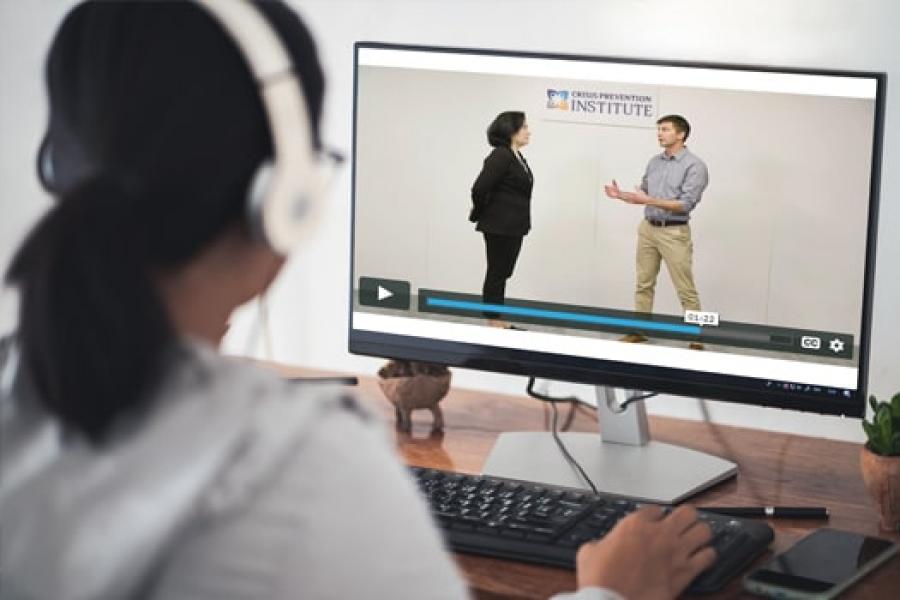
All staff are trained in CPI’s Non-Violent Crisis Intervention program, and we utilize these communication guidelines and strategies in our day-to-day interactions with people, as well as in the management of a crisis scenario where safety becomes a concern.
All staff are trained in CPI’s Non-Violent Crisis Intervention program, and we utilize these communication guidelines and strategies in our day-to-day interactions with people, as well as in the management of a crisis scenario where safety becomes a concern. Behavior is communication, and behavior influences behavior, so staff are trained to be positive role models of behavior, to watch for the cues that will assist them in intervening early and appropriate to the situation, and to not take the behaviors of a person in crisis personally and focus on supporting them to actively participate in problem solving. Physical supports are considered a LAST RESORT, and are used only if sanctioned in their support plan and only after all other strategies have been exhausted and / or when the person in crisis becomes a danger to self or others. Arcane Horizon places an emphasis on the verbal skills contained in this training as a way to avoid many situations from escalating into physicality, and train staff to be engaged, positive and proactive with the people they support to create the opportunities for skill building and making effective decisions in their own lives.

Basic First Aid
Arcane Horizon works with St. John Ambulance to provide quality First Aid training, with the Basic First Aid course. The course is eight hours long and they are conducted seven days a week.
Arcane Horizon works with St. John Ambulance to provide quality First Aid training, with the Basic First Aid course. The course is eight hours long and they are conducted seven days a week. The course is typically provided to agency staff at no cost to the employee. The primary focus is CPR Level C (adult/infant/child), AED (defibrillator), and emergency situations (ex. choking, bleeding, asthma, allergies) This course is aimed at individuals working within 30 minutes of a medical facility in low hazard work environments.

When is it Okay to Use the R-Word Video
If you're still not sure when it's okay to say the R-word, maybe it's time to listen to the 6.5 million people who have intellectual disabilities in the United States alone.
If you're still not sure when it's okay to say the R-word, maybe it's time to listen to the 6.5 million people who have intellectual disabilities in the United States alone.
https://www.youtube.com/watch?v=i0-WEOmQtrI
Hosted by: Elizabeth Plank
Produced by: Regina Dellea Billy Disney Sam Thonis
Special thanks to CO/LAB Theater Group www.colabtheatergroup.com

The Independence Myth - Denise Lance
Denise Lance (TEDxKC 2016 Challenge Winner) retired from disability research two years ago to focus on living as independently as she could with cerebral palsy.
Denise Lance (TEDxKC 2016 Challenge Winner) retired from disability research two years ago to focus on living as independently as she could with cerebral palsy. While still a disability rights advocate, she now focuses on writing and artistic endeavors, including folding origami with her feet. In her following Ted Talk, Denise questions society's emphasis on independence, especially for those with disabilities, in light of the interdependence of all humans on one another.
https://www.youtube.com/watch?v=7PD04yP4n-A